Doozy Robotics, a Singapore-based robotics company, says it is expanding operations across the United States, Gulf Cooperation Council (GCC) countries and Asia as it prepares for a planned Series A fundraising round.
The company said it is backed by investors including Cocoon Capital. It did not disclose the size of its seed funding round in the announcement.
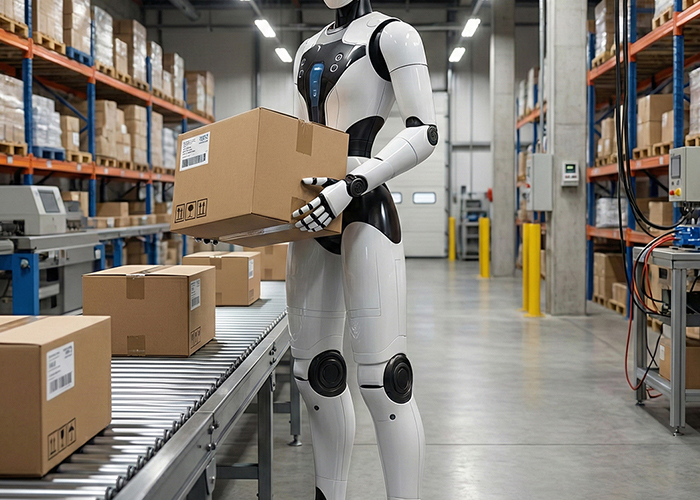
Founded by Suresh Chandrasekar and Ajmal Thahseen, Doozy is developing what it describes as a “vertically integrated” industrial robotics platform that combines a humanoid robot, autonomous mobile robots (AMRs) and autonomous forklifts. The systems are intended to be coordinated by an orchestration layer the company calls Eywa-OS, which it says can allocate tasks across robots and adjust operations in real time.
Doozy said its “Industrial Super Humanoid” is scheduled to launch in Q3 2026, with initial deployments to follow.
The company positioned the expansion around long-term labour shortages in manufacturing and logistics. It cited projections that labour constraints in the US could contribute to more than US$1 trillion in negative GDP impact by 2030, and pointed to demographic shifts in the workforce.
Chandrasekar said the company is building a “Physical AI workforce” for manufacturing and that the US expansion is intended to support that effort.
Doozy also said it is offering a subscription-based “Robot-as-a-Service” model, where customers pay monthly for access to an “integrated autonomous workforce” and can scale the number of robots up or down based on production demand.
The company claimed early commercial activity including a “qualified global pipeline” of more than US$200 million and a US$144 million memorandum of understanding (MOU) with an unnamed industrial conglomerate. It also said a pilot deployment is underway with a US pharmaceutical company and that it has engagements spanning Daimler, Carrier and VitaQuest.
Cocoon Capital managing partner Michael Blakey said the fund was impressed by the company’s progress and cited claimed performance improvements in industrial environments, including the ability to navigate uneven floors and “disorganized” spaces and to reduce operational footprint compared with traditional forklifts.