AI infrastructure spending is projected to rise sharply over the next five years, with one potential pinch point emerging in the precision manufacturing tools used to build next-generation data centre hardware, according to Lithuania-based femtosecond laser maker LITILIT.
In a media release, the company pointed to a Goldman Sachs estimate that annual AI infrastructure capital expenditure will grow from US$765 billion in 2026 to US$1.6 trillion by 2031, driven by demand for compute, new data centre construction and supporting energy infrastructure. Goldman Sachs also warned that power, labour and equipment bottlenecks could extend the lead time between investment commitments and operational capacity.
LITILIT argues that another, less visible constraint could be the industrial-scale availability of femtosecond lasers—ultrafast lasers used in high-precision processing steps for components such as semiconductor packages, glass substrates and optical interconnects.
The company also cited TrendForce forecasting that the market for co-packaged and near-packaged optics—optical connections designed to increase data transfer speeds—will expand from around US$100 million in 2025 to more than US$39 billion by 2030. As data centres shift to faster interconnects to manage the movement of data between compute and memory, demand is expected to rise for manufacturing techniques that minimise heat damage in sensitive materials, LITILIT said.
According to LITILIT CEO and co-founder Nikolajus Gavrilinas, femtosecond lasers are increasingly used for processes such as drilling microscopic holes in glass interposers—wiring layers used to connect chiplets in advanced computing systems. He said the ultrashort laser pulses reduce heat transfer to surrounding material, lowering the risk of cracking or chipping compared with conventional laser or mechanical drilling.
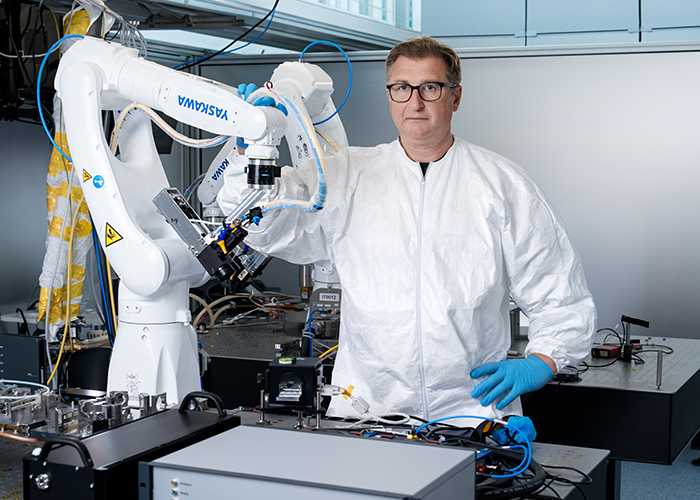
Despite rising demand, the company said producing femtosecond laser systems at industrial volumes remains challenging, arguing that many current systems evolved from scientific instruments and can be difficult to automate and reliant on specialist skills.
LITILIT said it has developed a manufacturing approach based on patented inventions created by its co-founders in collaboration with the Center for Physical Sciences and Technology (FTMC) in Vilnius. The company claims the approach reduces component complexity and increases automation to support scale production.
The company said it began construction of a laser factory in Vilnius in June 2026 and plans to replicate the model with international partners.