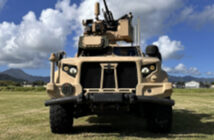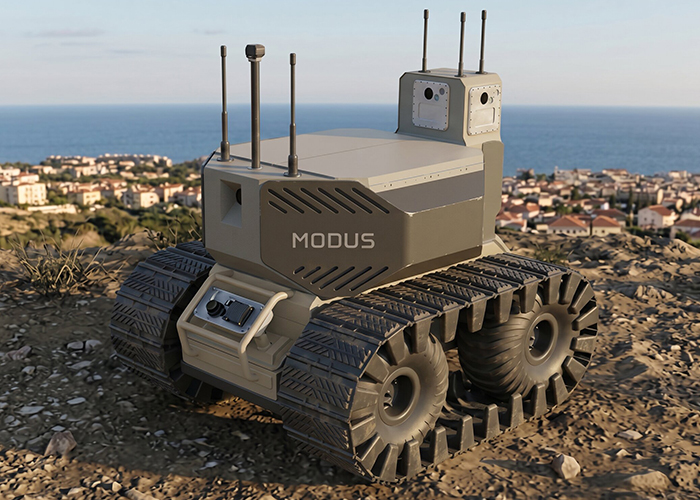
Ondas Holdings Inc. has unveiled two AI-enabled defence systems aimed at force protection and robotic support for manoeuvre forces: MODUS, a mobile counter-uncrewed aircraft system (counter-UAS) platform, and IRON WAVE, a robotic combat suite intended to operate ahead of frontline troops.
The company plans to showcase the systems at the Eurosatory defence exhibition in Paris, running 15–19 June 2026.
Ondas said modern battlefields are increasingly shaped by low-altitude drone threats, including first-person view (FPV) drones, swarms and fibre-optic guided systems that can be resistant to electronic warfare, as well as multi-domain operations that require coordination across sensors, networks and effectors.
MODUS (Modular Under-Layer System) is positioned as a mobile, autonomous protection capability for manoeuvre forces. According to the company, it is designed to address low-altitude threats, including fibre-optic guided drones and high-density swarm attacks.
Ondas said MODUS integrates cyber detection, GNSS disruption, radar, AI-supported electro-optical sensing, autonomous interceptors and layered effectors into what it describes as an autonomous “sensor-to-shooter” system, with a “man-above-the-loop” control model. The company said the system uses real-time sensor fusion to assess the operating environment and coordinate responses, and is intended to move with forces in contested and GNSS-denied environments.
IRON WAVE is described as a deployable robotic combat suite designed to place robotic systems ahead of ground forces during high-risk missions. Ondas said the concept is built around “Bots Before Boots”, with robotic platforms intended to detect, classify and neutralise threats before personnel are exposed.
The company said the suite includes a command unit, robotic combat vehicles, mission-control infrastructure and operator stations. Ondas said IRON WAVE is already undergoing operational evaluation and is designed to allow small teams to control multiple robotic combat and surveillance platforms using AI-assisted coordination. It listed potential use cases including route clearance, explosive ordnance disposal (EOD), reconnaissance, logistics and forward operational support.
“Operational environments are changing faster than traditional deployment cycles can support,” Ondas CEO Eric Brock said. “Military forces require autonomous systems that can be rapidly integrated, adapted to evolving threats, and deployed directly into frontline operations.”