Arkeus, an Australian defence technology company developing AI-powered sensing systems for autonomous platforms, has raised A$25 million in a Series A round to support expansion and new manufacturing capacity in Queensland and the United States.
The funding round was led by QIC Ventures, with participation from new investors R+VC, Folklore Ventures and DYNE Ventures. Existing investors Main Sequence Ventures, Salus Ventures and Beaten Zone also participated.
Arkeus said it plans to establish advanced manufacturing capabilities in Queensland and the US, with the stated aim of supporting “sovereign defence capability” and speeding delivery of systems into operational use.
The company pointed to recent defence work as evidence of demand. It said it secured the Australian Army Wide Area Airborne Surveillance Program in November 2025 to enhance sensing capabilities for the Army’s Tactical UAS fleet. Arkeus also said it has won contracts with the United States Department of War following competitive evaluations against US incumbents.
According to the company, those evaluations showed its sensing systems could detect targets up to eight times further than existing optical systems in degraded visual conditions. Arkeus also said its technology has been integrated with drone manufacturers including AeroVironment, Textron, Tekever and Boeing subsidiary Insitu.
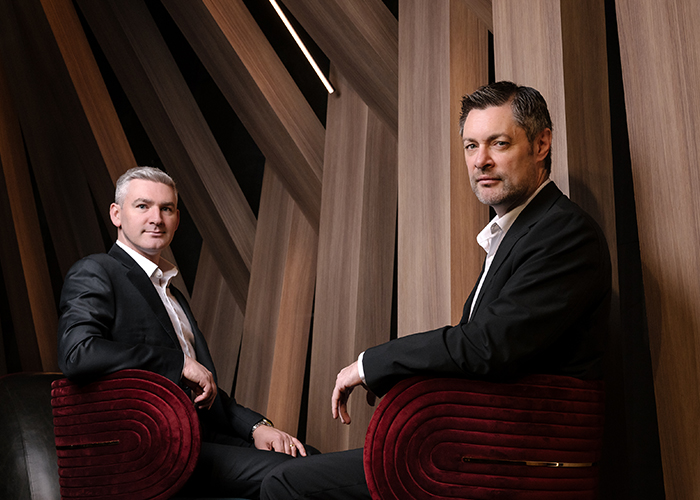
Arkeus was founded in 2020 in Melbourne by CEO Simon Olsen and CTO Dr Jonathan Nebauer. In a statement, Olsen argued that autonomy is constrained by perception, and said decision-making is moving closer to the edge, requiring changes to how systems sense and interpret their environment.
Arkeus said its technology includes hyperspectral optical radar systems designed to capture multiple layers of visual data simultaneously, enabling AI to detect, classify and track objects across different operating domains, including day and night and in environments where traditional sensors can be less effective.
The company said its approach is intended to support real-time interpretation at the edge, reducing reliance on communications links or remote processing. It also said it has a growing pipeline of defence programs and is targeting expanding global demand for autonomous operations.