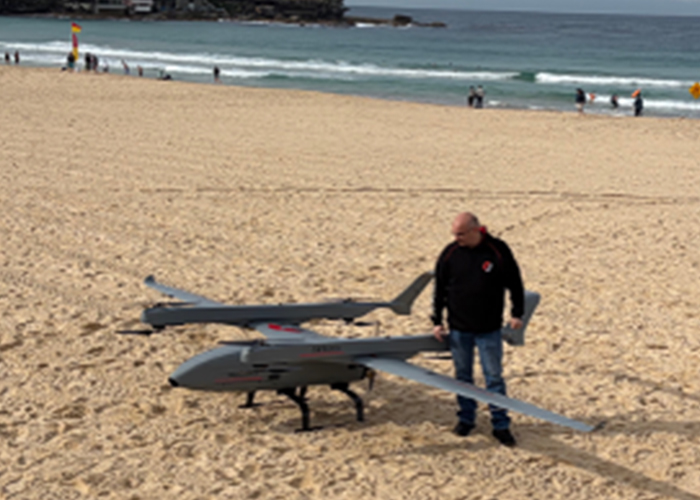
Sydney-based autonomous aviation company Carbonix says it has become the first company in Australia to achieve Safety Assurance Integrity Level (SAIL) III certification for a drone, in a development that could influence how Beyond Visual Line of Sight (BVLOS) operations are assessed and approved.
The company said the certification was achieved in collaboration with the Civil Aviation Safety Authority (CASA), and that it is believed to be a global first for this class of aircraft.
Carbonix founder and chief executive Dario Valenza said the certification reflected increased alignment between industry and regulators on frameworks for autonomous aviation. “Australia has developed some of the world’s most advanced drone technology and this milestone shows what can be achieved when industry and regulators work closely together. It creates an important pathway toward safe, scalable autonomous aviation operations in Australia,” he said.
In practical terms, Carbonix said the certification moves long-range drones closer to being treated as aviation systems with established assurance, rather than technology requiring repeated case-by-case approvals.
The company said the SAIL III framework is intended to validate the maturity, reliability and engineering assurance of the drone system, as part of an internationally recognised approach to autonomous aviation regulation supporting more complex BVLOS operations.
CERTIFICATION SCOPE
Carbonix said it was required to demonstrate the reliability of its aircraft structure and propulsion systems, avionics and communications architecture, manufacturing systems and supply chain, and maintenance procedures and operational documentation.
OPERATIONAL IMPACT
The company said the certification provides a pathway toward more scalable commercial drone operations in areas including mining, energy transmission, gas infrastructure, remote surveying and critical infrastructure monitoring.
Carbonix said it has since received BVLOS operational approvals across the Surat Basin in southern Queensland—an area it described as roughly the size of Belgium—for operations over gas gathering and pipeline networks for energy customers. The company said the approvals allow it to conduct long-range inspection and surveillance missions that have traditionally been carried out by helicopters, light aircraft and ground crews.
Carbonix said the approvals will allow it to use its Ottano platform’s long-endurance and full-range capabilities in remote environments, supporting longer missions and wider coverage with reduced reliance on crewed aviation and ground-based operations.
Valenza said long-range autonomous drones can reduce risk compared with crewed operations. “Replacing crewed aircraft with long-range autonomous drones significantly improves safety, reduces fuel burn and delivers faster, higher-quality data for infrastructure operators,” he said.