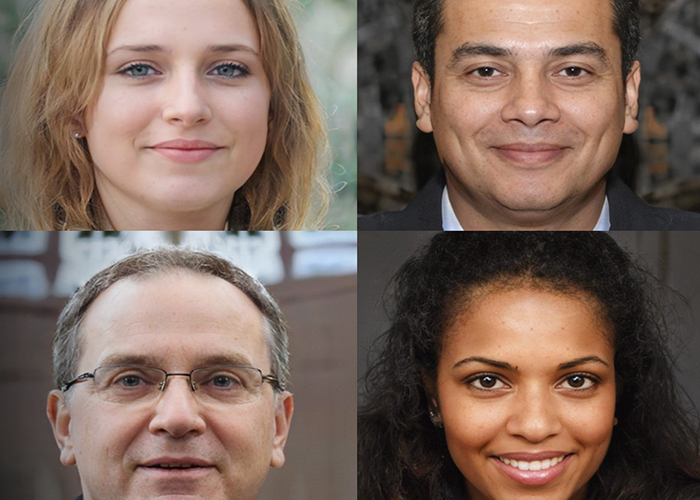
Researchers at the Australian National University (ANU) say people can be trained to better identify AI-generated faces, a capability they argue could help reduce deepfake-enabled fraud.
The study, led by ANU’s Emotions and Faces Lab, examined whether humans could be taught to distinguish realistic synthetic faces from photographs of real people. The researchers said deepfake faces have become difficult for many people to detect, contributing to increased AI-related fraud.
Lead researcher Associate Professor Amy Dawel said that training focused on spotting obvious visual errors—such as anatomical anomalies—has shown limited results, in part because image generation systems have improved and adversaries may avoid images with clear defects.
Instead, the ANU team trained participants to focus on six perceptual qualities they said differ between AI and human faces: distinctiveness, memorability, proportionality, symmetry, attractiveness and expressiveness. Dawel said AI-generated faces tend to appear more symmetrical, proportional and attractive, and that without training people may interpret those traits as signs of authenticity.
The researchers reported that participants’ performance improved after training, with a subset described as “high performers” achieving near-perfect accuracy. ANU Honours student Tanya George, who trained participants in the main study, said even relatively short training sessions improved accuracy and could inform practical education tools as AI-generated imagery becomes more convincing.
The work was replicated by a separate team at the University of Victoria in Canada, led by Professor Jim Tanaka and Dr Eric Mah. Mah said the replication supported the original findings and that online training could be delivered at scale at low cost.
Dawel said improving human detection capability matters because automated detection tools alone may not be sufficient. She said algorithmic approaches can be difficult to interpret and recent benchmarks show weaknesses, arguing for “ethical and explainable” approaches that keep humans involved in decision-making.
The study, Training Humans to Detect AI-generated Faces, is published in PNAS.