Technology developed in Australia to explore wombat burrows has been deployed in eastern Türkiye as part of an investigation into the Durupınar Formation near Mount Ararat, a boat-shaped geological feature that some researchers have linked to the biblical story of Noah’s Ark.
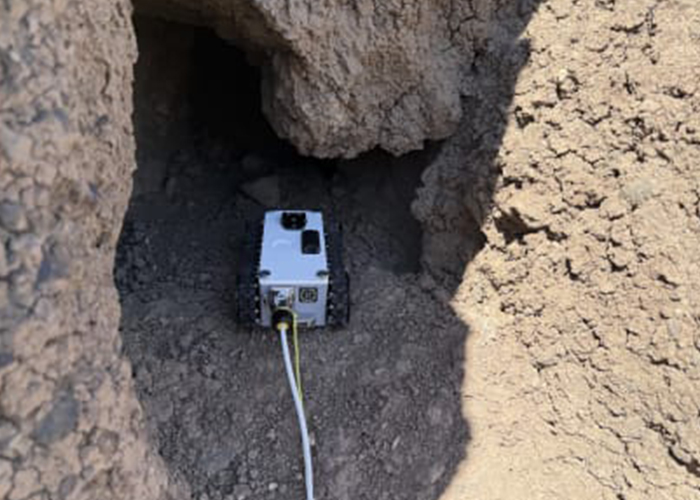
The underground exploration robot, called Gopher, was designed by La Trobe University electronics engineering academic Dr Robert Ross and has been sent to the site to support an international team drilling and collecting core samples.
Dr Ross said the collaboration with Noah’s Ark Discovery began about nine months ago after he saw a request for a robot able to explore the area. He said the outcome of the investigation remained uncertain, but the technology could help researchers better understand the site.
Gopher is a lightweight, remote-controlled robot equipped with front and rear waterproof wide-angle cameras and environmental sensors. La Trobe said it can collect data from locations that are difficult for people to access, including up to 25 metres below the surface.
The university said the robot left Australia in late July and is a smaller version of an earlier platform dubbed WomBot, first developed in 2021 for burrow exploration. Dr Ross has also produced similar models for armadillo burrow work in South America.
The project sits at the intersection of robotics, sensing and field research, and reflects how platforms initially built for environmental monitoring can be repurposed for other forms of remote investigation. However, claims about the existence of Noah’s Ark are widely contested, and the Durupınar Formation has long attracted debate among archaeologists, geologists and religious researchers.
Edward Szall, Head of Production at Noah’s Ark Discovery, said the investigation can be constrained by harsh winter conditions, with temperatures dropping well below freezing. He said the group planned to work with Dr Ross and other university partners in the next season to improve and upgrade the drone.
Dr Ross said the robot could also be used in future for wildlife detection or other archaeological work. La Trobe said WomBot continues to be sought by protection agencies in Australia for wildlife conservation efforts and burrow mapping.