Echodyne and Allen Control Systems (ACS) have signed a Strategic Collaboration Agreement aimed at accelerating the development and deployment of integrated counter-unmanned aircraft system (C-UAS) capabilities across land and maritime missions.
Under the agreement, the companies will collaborate across Echodyne’s commercial counter-UAS radar hardware and software roadmap and ACS’s Bullfrog robotic weapon station capabilities. The companies said the work follows both firms receiving awards from Joint Interagency Task Force 401 for its Domestic Shield effort and the JIATF-401 C-UAS Marketplace.
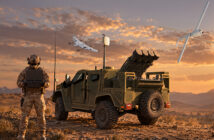
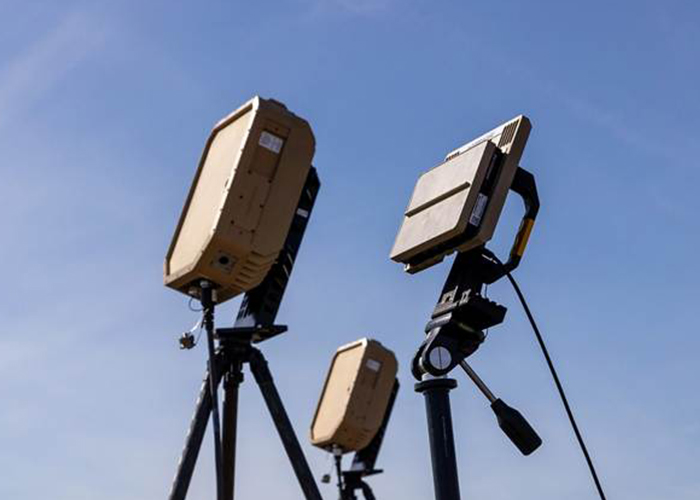
ACS’s Bullfrog system combines computer vision, autonomous control and precision robotics with existing weapon systems to detect, track, identify and engage unmanned threats. The companies said integration of Echodyne’s EchoShield radar is intended to extend Bullfrog’s performance by providing persistent positional tracking to support earlier awareness and higher-confidence target tracks.
According to the companies, EchoShield generates location and velocity data across a range of drone types and flight profiles, with open interfaces designed to feed radar data into Bullfrog and broader command-and-control platforms.
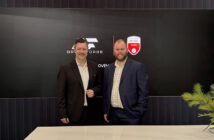
Eben Frankenberg, CEO of Echodyne, said the integration is focused on improving counter-UAS effectiveness through data quality and pairing ACS’s autonomous weapon station with EchoShield radar.
Mike Wior, co-founder and CEO of ACS, said the partnership is intended to improve early identification and tracking of threats and support on-the-move defence, using radar track data to support engagements.
The companies positioned the collaboration as targeting the cost and supply constraints associated with specialised missile interceptors by combining commercially manufactured radar with standard-issue weapons and ammunition.
Maritime operations are a stated focus. The companies said Bullfrog’s architecture is intended to support deployment on crewed and uncrewed platforms, and that EchoShield is being integrated aboard uncrewed surface vessels for maritime awareness and C-UAS missions where compact size and low power consumption are important.
Echodyne and ACS said they will continue integrated testing and participate in U.S. Department of Defense demonstration events to evaluate the combined system under operational conditions, with the results expected to inform further product integration for fixed-site, mobile, expeditionary and maritime requirements.