HII has expanded its unmanned systems production campus in Pocasset, Massachusetts, increasing manufacturing space by 10,000 square feet as it responds to what it describes as growing global demand for autonomous maritime platforms.
The added space lifts capacity at the site from 40,000 to 50,000 square feet and is intended to support the build, development and integration of unmanned and autonomous maritime systems. HII said the facility produces systems including the REMUS family of unmanned underwater vehicles and ROMULUS unmanned surface vessels.
HII said the expansion will add production capacity for the U.S. Navy’s Lionfish small unmanned undersea vehicle, based on the company’s REMUS 300 platform. The company also pointed to a Navy option-year contract awarded in July for continued Lionfish production. The facility will also support production of the REMUS 620.
The company said the expanded campus will also support integration of its Odyssey Autonomous Control Solutions software, which it said is used for simulation and modelling to support autonomous operations and includes autonomy hardware to be installed on ROMULUS surface vessels.
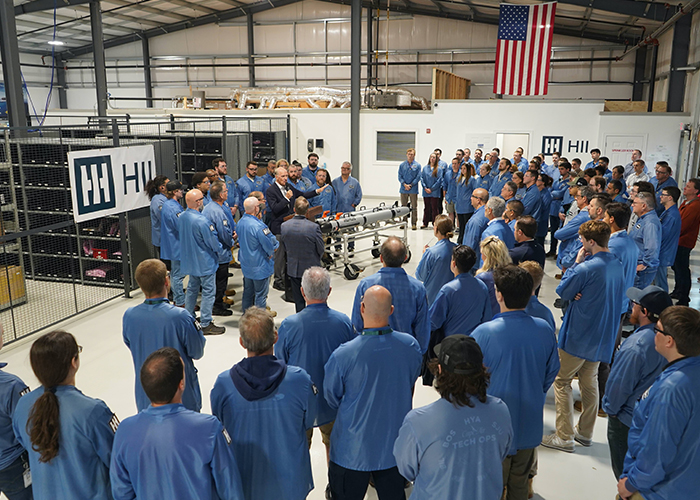
A ribbon-cutting ceremony for the expanded facility was attended by U.S. Representative Bill Keating (MA-09). HII said it employs about 300 people in Pocasset and has added 50 employees year to date in 2026.
HII linked the site’s work to a longstanding technology development partnership with Woods Hole Oceanographic Institution, and said systems produced in Pocasset are used across defence and national security, as well as ocean exploration, research, environmental monitoring and commercial maritime operations.
The company said it has delivered more than 750 REMUS vehicles to customers in more than 30 countries, including 14 NATO members, and that more than 90% of REMUS systems delivered over the past 25 years remain in active service.