DroneShield has launched RfAI-3, the third generation of its radio frequency (RF) intelligence engine, as the company seeks to address what it describes as a growing gap in counter-drone detection for previously unclassified emitters.
The company said RfAI-3 is designed to prioritise wideband detection, shifting away from approaches that rely on drones being pre-catalogued in an RF dataset before they can be reliably identified.
According to DroneShield, many RF detection systems operate using “classified emitter” models, where recognition depends on prior inclusion in a library of known signals. The company argues that as drone use expands and adversaries adopt a mix of commercial and purpose-built systems, reliance on pre-classified libraries can limit detection and identification in fast-changing environments.
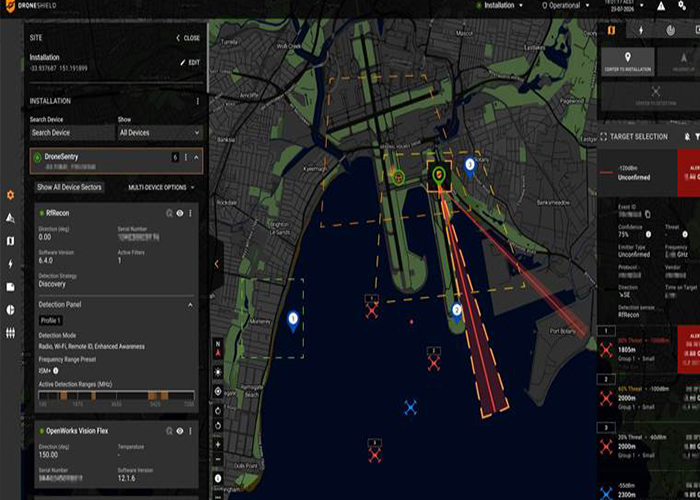
DroneShield said RfAI-3 works by detecting emissions present in the spectrum and fingerprinting each signal against previously observed drone signatures. Where there is a match, the emitter is classified with detailed information. Where there is no match, the system generates a signature for the unknown emission and presents it to an operator with a confidence assessment and ranking against the broader spectrum picture. The company said new signatures become references for future encounters.
In a statement, DroneShield chief executive Angus Bean said: “The drone threat doesn’t wait for classification. RfAI-3 represents a fundamental shift in how we approach RF-based detection. We are no longer limited to seeing only what we already know.”
DroneShield also positioned the release as part of a progression of its RF detection capability. It said the initial RfAI architecture was developed in 2018, with RfAI-2 released in 2023 and aimed at expanding the RF intelligence dataset over time through ongoing acquisition and characterisation of new drone models and protocols.
The company said RfAI-3 retains the expanding RF intelligence dataset approach, which it distributes to deployed systems, and claims this improves performance against known emitters over time without requiring hardware changes.
DroneShield said RfAI-3 is intended for its next-generation hardware platforms, with initial releases expected in the second half of calendar year 2026 and further releases through 2027. The company added that its existing product lineup will continue to be supported through its software subscription model, including delivery of expanded emitter coverage as its dataset grows.