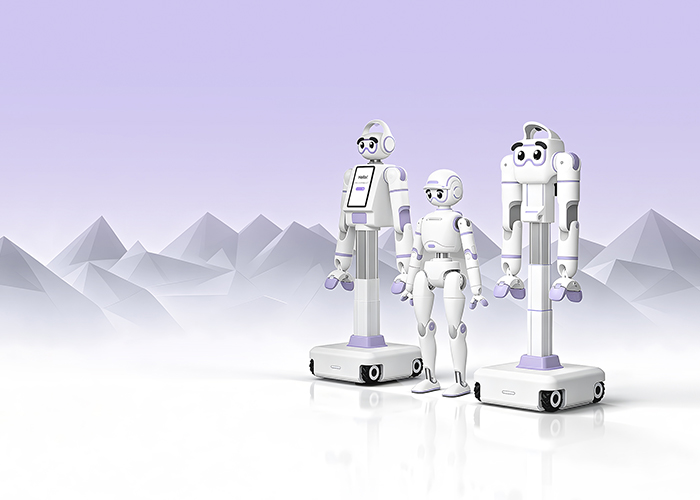
Striding AI says it is developing a new generation of “robotic foundation systems” intended to support the deployment of Physical AI in real-world environments, according to a company announcement distributed via Media OutReach Newswire on 2 July.
The Beijing-based company said its work centres on foundational technologies designed to help robots “perceive, reason, act, and continuously improve” through interaction with the physical world. It said it is integrating foundation models with robotic perception and control systems, real-world action data, and deployment infrastructure, with the aim of enabling robots to carry out tasks in commercial and industrial settings.
Striding AI’s founder and CEO, Song Yao, said the company believes progress in Physical AI depends on what it described as the “co-evolution of data, models, and infrastructure”.
The company said it is taking a “systems-first” approach, combining software and hardware components, data infrastructure, control systems and deployment engineering. It also said its leadership team has backgrounds spanning AI chips, autonomous driving, robotics research and industrial technology.
As an initial focus, Striding AI said it plans to start with deployments in structured retail environments. The company listed potential use cases including shelf restocking, inventory counting, product organisation and checkout assistance, describing retail as a setting with repeatable workflows and frequent human interaction.
Over time, the company said it expects the same foundation systems to support broader applications across retail, food, agriculture, logistics, healthcare and telecommunications.
Striding AI also outlined an architecture it said spans perception, planning, execution, feedback and recovery, incorporating human-in-the-loop reinforcement learning. In early internal testing, the company said its method improved task success rates “by up to 3x”, and that it is building infrastructure for robot pretraining, distributed reinforcement learning and edge-to-cloud orchestration.
The announcement did not include timelines for commercial availability, details of pilot customers, or independent validation of performance claims.