CSIRO has launched a new AI computing system designed to process data close to where it is generated, aiming to support real-time learning in robots, sensors and other physical AI applications.
The system, called Vetra, is located at CSIRO’s Queensland Centre for Advanced Technologies (QCAT) in Pullenvale. CSIRO says the infrastructure is intended to address limits of cloud-only computing for safety-critical and time-sensitive use cases, where latency and connectivity constraints can affect performance.
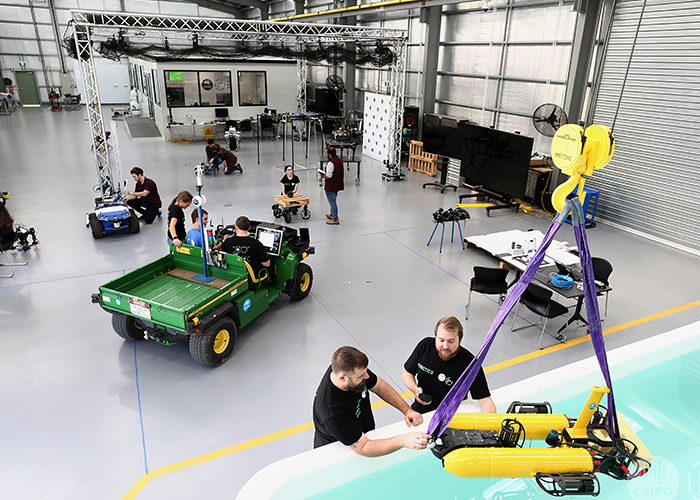
Vetra is positioned alongside what CSIRO describes as Australia’s largest robotics research facility, with the aim of enabling robots and sensing systems to learn from real-world testing rather than relying on simulations alone.
Liming Zhu, Director of CSIRO’s Data61, said Vetra is intended to provide “sovereign, trusted AI computing at the edge” by placing high-performance computing physically near robotics and sensing systems.
Dr Peyman Moghadam, Head of CSIRO’s Embodied AI Cluster, said Vetra forms part of an integrated “edge-core-cloud” approach, with local processing handled on site before data is sent to larger computing centres for more intensive analysis.
CSIRO also emphasised sustainability features in the design, including carbon dioxide-based cooling systems and closed-loop liquid cooling. The agency said the system is expected to waste almost no water under normal operation, and to save around 225 tonnes of carbon dioxide emissions each year, which it compared to removing 50 cars from Queensland roads annually.
CSIRO said Vetra includes 48 graphics processing units (GPUs) and was designed to be modular so it can expand as demand grows. The agency said the infrastructure was delivered with support from Australian small and medium sized businesses, including Oper8 Global and XENON, alongside global technology partners.