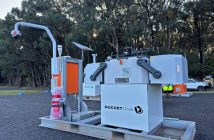
Ondas Inc. says its subsidiary Sentrycs has delivered and deployed counter-drone systems to a German State Police office, marking an expansion of its presence in European law enforcement markets.
The deployment involves Sentrycs’ protocol-based counter-UAS technology, designed to detect, identify and assume control of unauthorised drones without using jamming or kinetic methods. The system is intended to support policing of large-scale events and sensitive operations by guiding intercepted drones to predefined landing zones while identifying serial numbers and operator locations.
The announcement comes amid increased reporting of unauthorised drone activity in Germany. According to federal criminal police figures cited by the company, more than 1,000 suspicious drone flights were recorded in 2025, including incidents near military sites, airports and government facilities. Authorities have highlighted limitations in detection-only systems that lack compliant mitigation options.
Sentrycs’ approach, described as “Cyber over RF”, operates by interacting with drone communication protocols rather than disrupting radio frequencies. The company says this reduces interference with surrounding communications networks, which can be critical in dense urban environments.
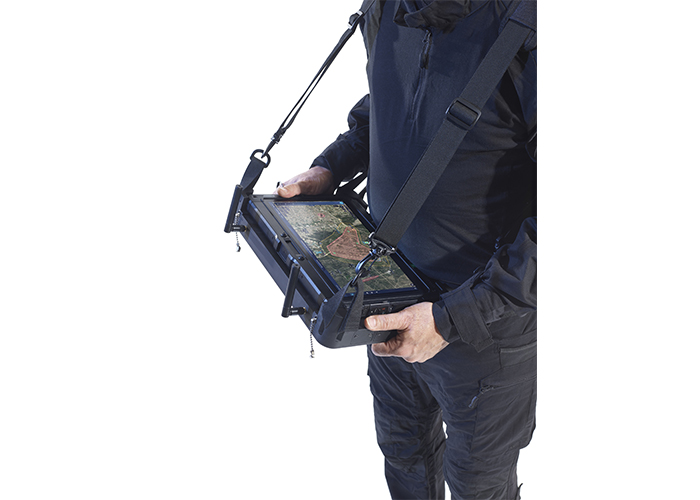
The contract announcement coincides with Sentrycs’ planned launch of a new portable counter-UAS system, Sentrycs Scout, at the Enforce Tac exhibition in Germany. The handheld, battery-powered system is designed for tactical and mobile use cases, including convoy protection, VIP security and infrastructure patrols.
Scout is positioned as a field-deployable version of the company’s fixed installations, providing passive detection, identification and protocol-based mitigation without fixed infrastructure. The company said the system is ruggedised for operational use in challenging environments.
Ondas, which operates autonomous systems and private wireless businesses, cited external market research estimating that the global five-year addressable market for handheld counter-UAS systems could approach US$9.8 billion.
The agreement with German State Police reflects continued demand for counter-drone capabilities across Europe as authorities seek tools that balance threat mitigation with regulatory and operational constraints.