SYOS Aerospace has secured a contract with the New Zealand Defence Force (NZDF) to supply a suite of multi-domain uncrewed systems and support a structured experimentation programme aimed at advancing autonomous capability.
Under the agreement, SYOS will provide air, land and sea autonomous platforms alongside technical services, training and operational support. The programme is designed to assist NZDF’s Capability Branch in testing, evaluating and integrating emerging uncrewed technologies as part of broader modernisation priorities.
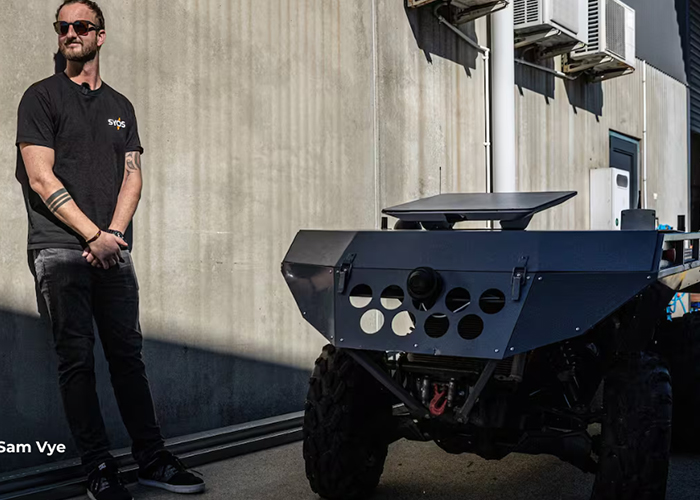
The contract includes delivery of the SM300 uncrewed surface vessel (USV), SA2 and SA7 uncrewed aircraft systems (UAS), and the SG400 uncrewed ground vehicle (UGV). These systems will be used in a structured experimentation framework to assess performance, interoperability and operational concepts across multiple domains.
The move reflects a wider shift among defence forces toward integrated, multi-domain autonomy, where uncrewed systems operate across maritime, aerial and terrestrial environments in coordinated roles. For smaller defence forces such as NZDF, structured experimentation offers a pathway to assess emerging technologies without committing immediately to full-scale procurement.
SYOS CEO and founder Sam Vye said the company would work closely with NZDF personnel throughout the development process.
“We’re delighted to support the NZDF and are well-positioned to support the NZDF’s strategic priorities. Our platforms and systems have been proven in some of the world’s most demanding environments, and we’re proud to bring that experience to New Zealand’s capability development,” Vye said.
The agreement also positions SYOS to potentially support Project Convergence 2026, a multinational experimentation campaign focused on accelerating AI-enabled battlefield management and next-generation military technologies. Project Convergence, led by the United States Army, has increasingly incorporated international partners as it tests networked autonomy and decision-support systems in contested environments.
The SM300 USV is designed for extended autonomous maritime operations, offering modular mission configurations for surveillance, force protection and logistics roles. In the air domain, the SA2 and SA7 UAS platforms are positioned for intelligence, reconnaissance and surveillance (ISR) and airborne logistics applications. On land, the SG400 UGV is aimed at long-endurance autonomous ground operations, including resupply, reconnaissance and access to hazardous or hard-to-reach areas.
Beyond hardware supply, the contract emphasises integration and operational readiness. SYOS will provide technical services, training and support to ensure NZDF personnel can operate and evaluate the systems effectively. The structured experimentation model suggests a focus on iterative testing and user feedback rather than a one-off capability insertion.
The award follows SYOS being shortlisted by the UK Ministry of Defence for Project NYX, which is exploring the development of uncrewed “wingman” systems to operate alongside Apache attack helicopters. The combined developments indicate growing international interest in scalable autonomous platforms capable of operating across multiple domains.
For NZDF, the partnership signals a continued investment in autonomy as part of force modernisation, particularly in a Pacific security environment where maritime awareness, distributed operations and resilience are increasingly central. For SYOS, the contract strengthens its footprint in the Australasian defence market while aligning with broader multinational experimentation efforts shaping the next phase of AI-enabled military capability.