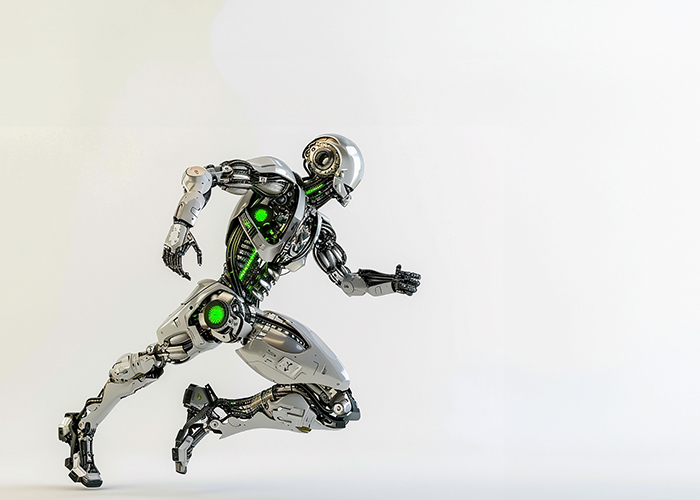
Many humanoid robotics startups backed by venture capital are facing fundamental challenges around cost, reliability and commercial viability that are unlikely to be resolved in the near term, according to new analysis from CB Insights. Investors are increasingly warning that enthusiasm for the sector is running ahead of evidence that humanoid robots can generate sustainable revenue.
Recent venture capital data from firms including KPMG and PitchBook shows artificial intelligence continues to dominate global investment flows, accounting for more than half of all VC funding in 2025. Within that broader AI surge, CB Insights data indicates growing investor interest in industrial humanoid robotics, making it one of the most active deal categories in the past quarter.
Industrial humanoid robotics recorded 17 deals last quarter, more than any other single AI-related category. By comparison, coding-focused AI agents and copilots accounted for 14 deals, while end-to-end software development agents recorded 12. Despite this momentum, analysts say the sector risks entering a speculative phase, with many companies making ambitious claims without demonstrating clear commercial traction.
Concerns about overheating are not limited to Western investors. China’s leading economic planning authorities have publicly cautioned that the humanoid robotics industry must balance rapid development against the risk of forming investment bubbles, according to reporting by Bloomberg.
Investors say much of the renewed interest in humanoid robotics is driven by advances in AI, which have significantly expanded the theoretical capabilities of robots. However, translating those advances into reliable, cost-effective products remains a major challenge.
Daiva Rakauskaitė, partner and manager at Aneli Capital, said today’s AI-driven investment boom shows similarities to the dotcom era, leaving many startups exposed if expectations outpace reality. She expects a correction within the next two to three years.
“Many AI startups that can’t yet generate revenue will fail, and the market is beginning to accept that,” Rakauskaitė said. “In humanoid robotics, the same risks apply, but they are often overlooked. It’s important to distinguish between established industrial robotics, which already deliver measurable value, and humanoid robots, which still struggle to prove commercial usefulness.”
While companies regularly showcase humanoid robots performing complex or athletic tasks, investors note that real-world applications remain limited. CB Insights highlights persistent barriers including real-time decision-making, dexterity, system reliability and high production costs. As a result, early use cases are largely confined to tightly controlled environments such as factories and warehouses, where tasks are predictable.
Rakauskaitė argues that current market conditions make a revenue-first investment approach essential, particularly as hype drives valuations higher.
“Investors should back companies with realistic economic models rather than growth driven by speculation,” she said. “Startups need to focus on early revenue through licensing, partnerships or clearly defined monetisation strategies. That discipline applies across AI and robotics.”
Despite caution around humanoid robotics, investors remain more optimistic about the broader robotics sector, where falling hardware costs and rapid AI advances are accelerating practical deployment. Rakauskaitė also pointed to Central and Eastern Europe as a promising region, citing its proximity to Germany’s industrial base and access to underutilised engineering talent.
She said long-term investor commitment, rather than short-term hype, would be critical to building sustainable robotics businesses as the sector matures.