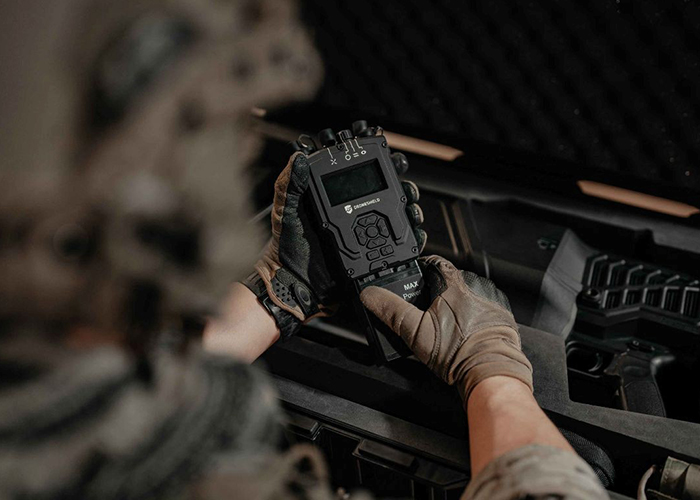
DroneShield has secured $21.7 million in new contracts to supply counter-drone equipment to a Western military customer, continuing a steady run of defence orders amid sustained global demand for anti-UAS capability.
The Sydney-based company (ASX:DRO) announced it had received six standalone contracts through an in-country reseller, covering dismounted counter-drone systems, spare kits and software subscriptions. The equipment is drawn from existing inventory, with delivery expected in the first quarter of 2026 and payment anticipated in the second quarter.
The reseller is a wholly owned subsidiary of a multi-billion-dollar, publicly listed global company that is required to distribute the products to the unnamed military end-customer. DroneShield said there are no additional material conditions attached to the contracts and no obligation for further orders from either the reseller or the end-user.
Over the past seven years, DroneShield has received 39 contracts from the same reseller, totalling more than $17.8 million prior to the current award. The latest package therefore exceeds the cumulative value of previous contracts with that channel partner, marking a significant step-up in order size.
The contracts cover dismounted counter-drone systems — typically portable or vehicle-mounted systems designed to detect, track and disrupt small unmanned aerial systems — along with associated sustainment items and software subscriptions. Demand for such systems has accelerated in recent years, driven by the proliferation of low-cost drones across both conventional and asymmetric conflicts.
Western militaries have increasingly prioritised layered counter-UAS architectures, combining electronic warfare, detection sensors and kinetic options to protect forward-deployed forces and critical infrastructure. Portable and rapidly deployable systems are particularly relevant in expeditionary environments, where small drones are frequently used for surveillance and targeting.
DroneShield confirmed that it does not consider the identity of the counterparty or customer to be price-sensitive information. The company stated that the announcement contains all material information relevant to assessing the contract’s impact on its securities and is not misleading by omission.
The timing of delivery — within the same quarter as the contract announcement — suggests the systems are either standardised configurations or already in production, reflecting a maturing supply chain and readiness posture. Drawing from existing inventories also indicates that DroneShield has positioned stock to meet near-term operational demand.