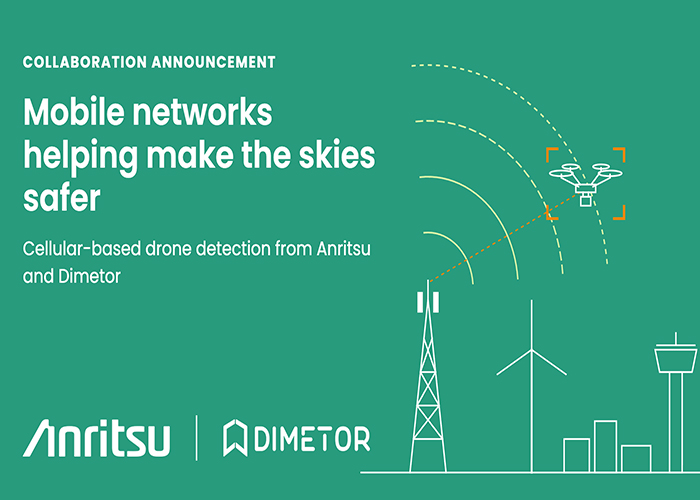
Anritsu Service Assurance and Austrian software company Dimetor say they are collaborating on cellular-based drone detection, a move aimed at positioning mobile network operators (MNOs) as contributors to airspace security around critical infrastructure.
The announcement follows a reported incident in August in which a drone carrying explosives struck a Ukrainian cargo plane at Leipzig/Halle Airport in Germany. The device did not detonate, but the case has drawn attention to the risks posed by drones that connect via public 4G and 5G networks rather than traditional radio control links.
Using commercial mobile networks can extend a drone’s operational range and, according to the companies, complicate detection by conventional sensors. That dynamic is prompting interest in whether telecoms infrastructure can provide additional visibility, particularly for sites such as airports, energy facilities and hospitals.
Anritsu and Dimetor argue that MNOs already carry the signals generated by cellular-connected drones and could use that data as a “network as a sensor” input to broader airspace monitoring systems. The companies say the approach is intended to build in privacy protections, GDPR safeguards and legal compliance.
The partnership combines Anritsu’s experience with operator network data and Dimetor’s focus on drones and airspace management. The companies say the goal is to provide insights from existing network infrastructure without major changes to operator environments.
The timing aligns with European policy direction that, according to the companies, calls for cellular-based drone detection to be tested and deployed. The collaboration is also framed against growth in legitimate drone operations, including emergency response, inspection and delivery, which increases the need to distinguish authorised activity from potential threats.
Nicolas Timothee, director of industry solutions at Anritsu, said operators could use network data to support airspace safety efforts. Dimetor CEO Thomas Neubauer said cellular networks underpin remotely controlled drones and that analysing network behaviour is important for safe and secure operations.
The companies said they plan to work with MNOs across Europe and the Middle East, starting with joint pilots in Q4 2026 and Q1 2027.