Axon Vision has received an initial order from Leonardo DRS for the supply of an AI-enabled counter-uncrewed aerial systems (C-UAS) capability, marking a further step in the cooperation between the two companies following a partnership agreement signed in late 2025.
The order, valued at approximately US$350,000, covers the delivery of an initial set of systems designed to provide end-to-end detection, classification, tracking and interception of aerial threats. The system is intended to address fast-evolving threats that require rapid response, including small and difficult-to-detect uncrewed aircraft.
Axon Vision said the new C-UAS capability combines its AI-based perception and threat classification software with Leonardo DRS’s experience in sensing technologies and system integration. The cooperation is aimed at developing AI-enabled mission systems that can improve situational awareness and survivability across a range of operational environments.
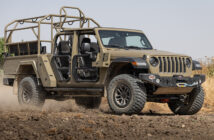
According to the company, the systems supplied under the order are expected to support US defence and homeland security users and will be evaluated through a series of operational trials and live exercises. These activities are planned across both manned and unmanned ground platforms and are intended to assess performance in counter-UAS and mobile force protection scenarios.
The evaluations are expected to contribute to the validation of emerging operational concepts, as well as demonstrate the modularity and deployability of the system across different platforms and mission profiles. Axon Vision said the C-UAS solution is designed to integrate using standard military interfaces, allowing it to be adapted for land and maritime applications.
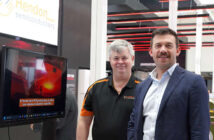
Axon Vision CEO Brigadier General (ret.) Roy Riftin said the order reflects continued cooperation with Leonardo DRS and supports the company’s focus on modular AI-based systems tailored to changing operational requirements.
Axon Vision president, CTO and co-founder Ido Rozenberg said the system is designed as a last-line defensive capability, capable of responding to fast-moving aerial threats in very short timeframes. He added that the US market remains a key focus for the company, with further deployment activity expected during 2026.
The order comes as defence organisations continue to prioritise counter-UAS capabilities in response to the growing availability and operational use of small uncrewed systems, particularly in mobile and expeditionary environments.